
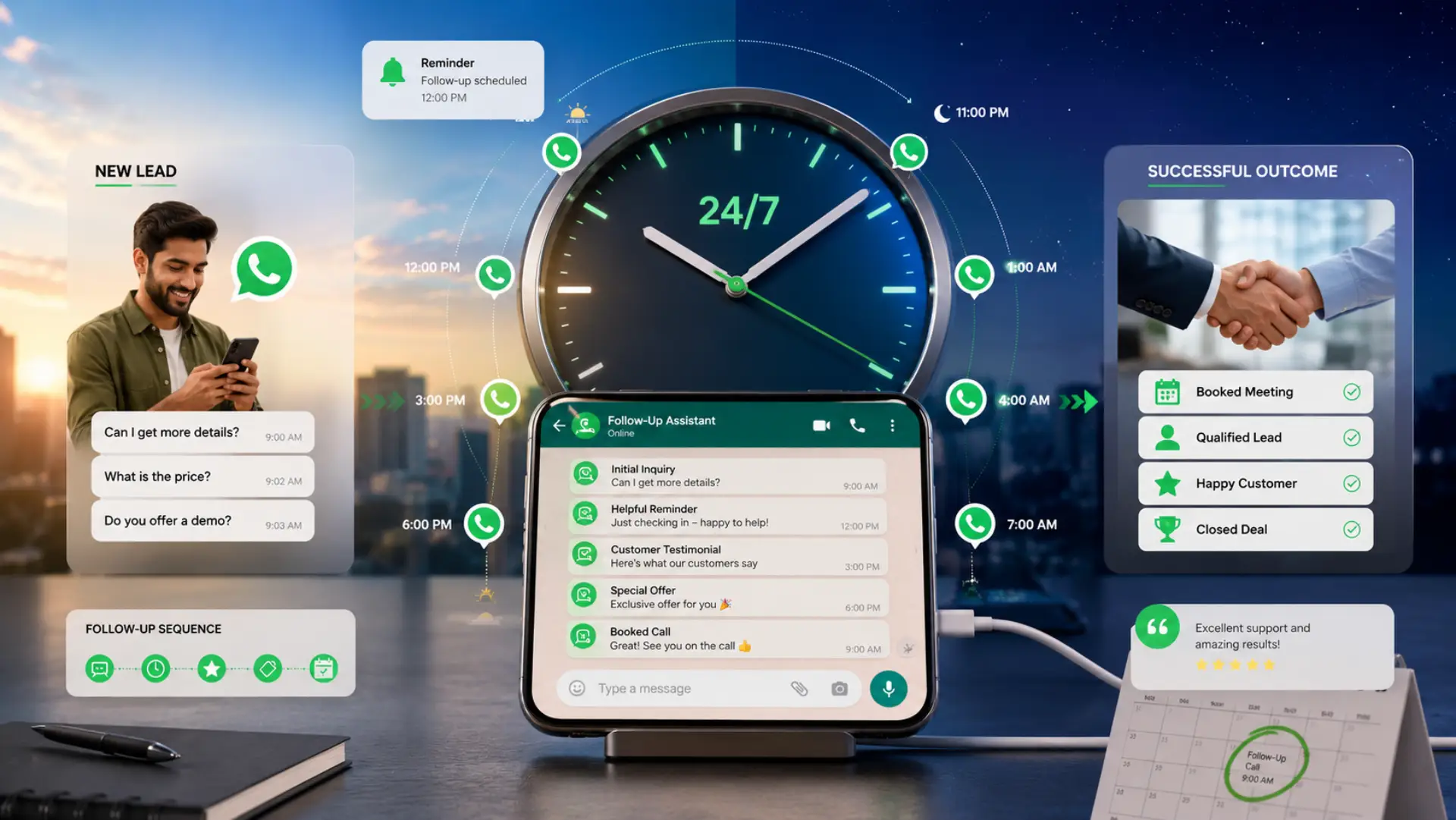
In sales, timing is everything—but consistency is what truly drives conversions. Most businesses lose potential customers not because their product is bad, but because they fail to follow up properly.
Leads get busy. They forget. They hesitate.
That’s where smart follow-ups come in.
With the right strategy—and a bit of automation—you can nurture leads, build trust, and close deals even while you sleep. This isn’t about spamming people with reminders. It’s about sending the right message, at the right time, in the right way.
Let’s break down how smart follow-ups can turn your WhatsApp into a 24/7 sales machine.
Why Most Follow-Ups Fail
Before fixing the problem, it’s important to understand it.
Most businesses:
- Follow up too late (or not at all)
- Send generic, copy-paste messages
- Come across as pushy or desperate
- Stop after 1–2 attempts
The result? Cold leads and missed revenue.
But here’s the truth:
80% of sales require multiple follow-ups, yet most people quit too early.
Smart follow-ups solve this by being consistent, personalized, and strategic.
What Makes a Follow-Up “Smart”?
A smart follow-up is:
- Timely → Sent when the lead is most likely to respond
- Relevant → Based on previous interaction
- Personalized → Feels human, not automated
- Value-driven → Adds something useful, not just “checking in”
When you combine these elements, your follow-ups stop feeling like sales messages—and start feeling like helpful conversations.
The Power of Automation (Without Losing the Human Touch)
Automation is what allows follow-ups to happen while you sleep.
Using WhatsApp automation tools, you can:
- Schedule follow-ups in advance
- Trigger messages based on user actions
- Send sequences over days or weeks
For example:
- Someone asks about your product → gets info instantly
- 24 hours later → receives a helpful reminder
- 48 hours later → gets a testimonial
- 72 hours later → receives a limited-time offer
All of this happens automatically.
But here’s the key:
Automation should feel invisible. The moment it feels robotic, it loses effectiveness.
Personalization: The Secret Weapon
A follow-up that feels generic gets ignored.
A follow-up that feels personal gets replies.
Use:
- The customer’s name
- Their specific interest
- Past conversation context
Example:
Instead of:
“Are you interested?”
Say:
“Hey Rahul, are you still looking for the marketing package we discussed?”
That small difference can double your response rate.
Timing Matters More Than You Think
Sending the right message at the wrong time is still ineffective.
Smart timing means:
- Following up within 24 hours
- Avoiding late-night spam (unless scheduled intentionally)
- Sending messages when users are active
If you notice higher engagement in the evening, schedule your follow-ups accordingly.
Good timing feels natural. Bad timing feels intrusive.
Use Content That Converts
Not all follow-ups should be text.
Mix in:
- Short videos explaining your product
- Customer testimonials
- Screenshots of results
- Voice notes for a personal touch
This makes your communication more engaging and persuasive.
A simple 30-second video can often do what 10 messages cannot.
Don’t Just Remind—Guide
Most follow-ups fail because they only remind.
Smart follow-ups guide the customer toward a decision.
Instead of:
“Just following up…”
Say:
“Based on what you shared, this option might be best for you.”
You’re not just chasing—you’re helping.
And people buy from those who help them make decisions.
When to Stop Following Up
Persistence is good. Annoyance is not.
A smart strategy includes an exit point.
After multiple attempts, send a message like:
“Hey, I don’t want to spam you—should I close this for now?”
This does two things:
- Respects the user’s space
- Often triggers a response
Sometimes, silence just means bad timing—not lack of interest.
The Result: Sales on Autopilot
When done right, smart follow-ups:
- Increase response rates
- Build stronger relationships
- Shorten the sales cycle
- Close more deals automatically
Instead of chasing leads manually every day, you create a system that works for you 24/7.
That’s how you turn WhatsApp into a revenue-generating machine—even while you sleep.
Final Thoughts
Smart follow-ups aren’t about sending more messages—they’re about sending better ones.
With the right mix of:
- Automation
- Personalization
- Timing
- Value
You can nurture leads effortlessly and convert them consistently.
Start simple. Build your sequence. Test what works.
Because in the end, the businesses that follow up smartly… are the ones that close the most deals.
